
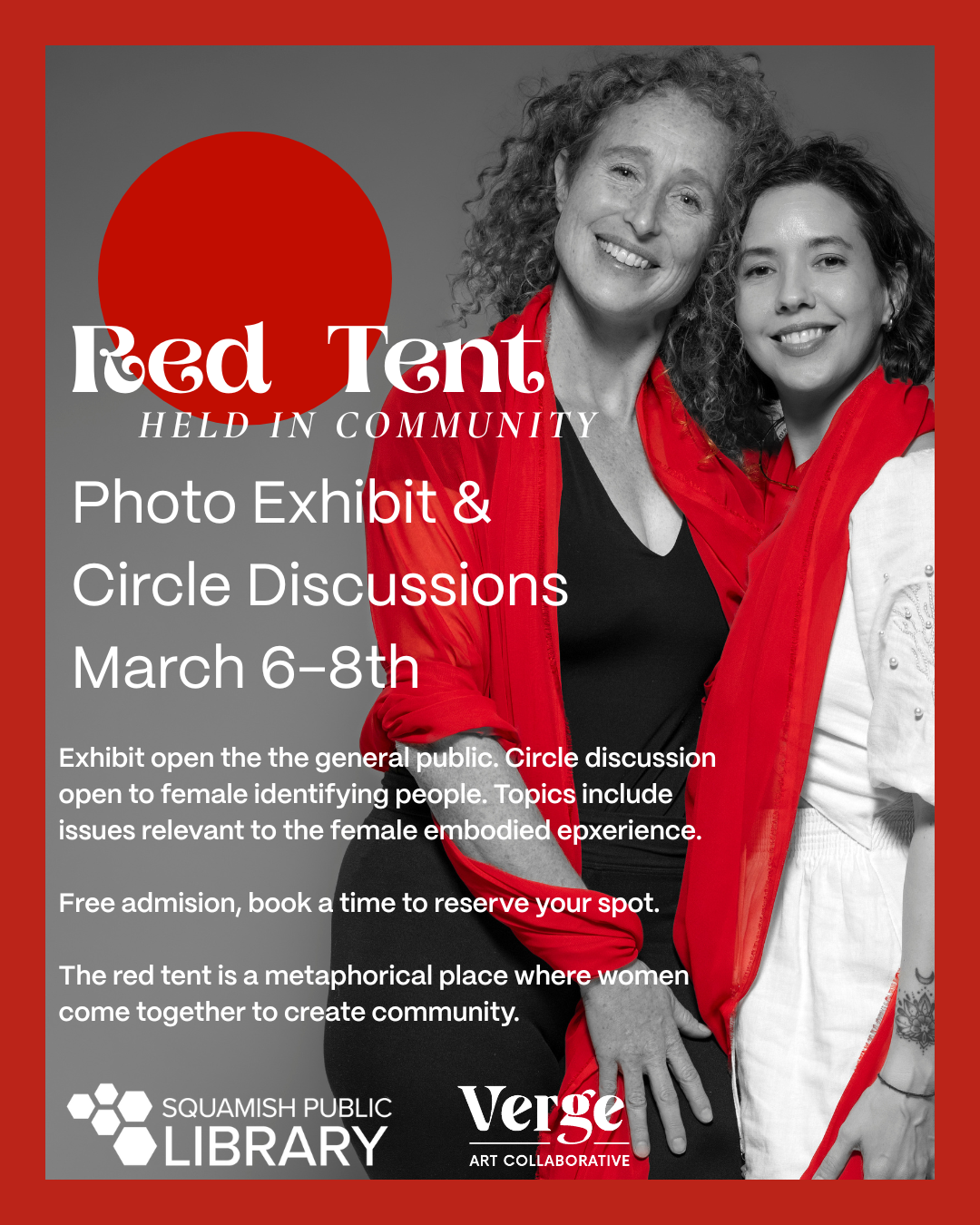
Red Tent: held in community
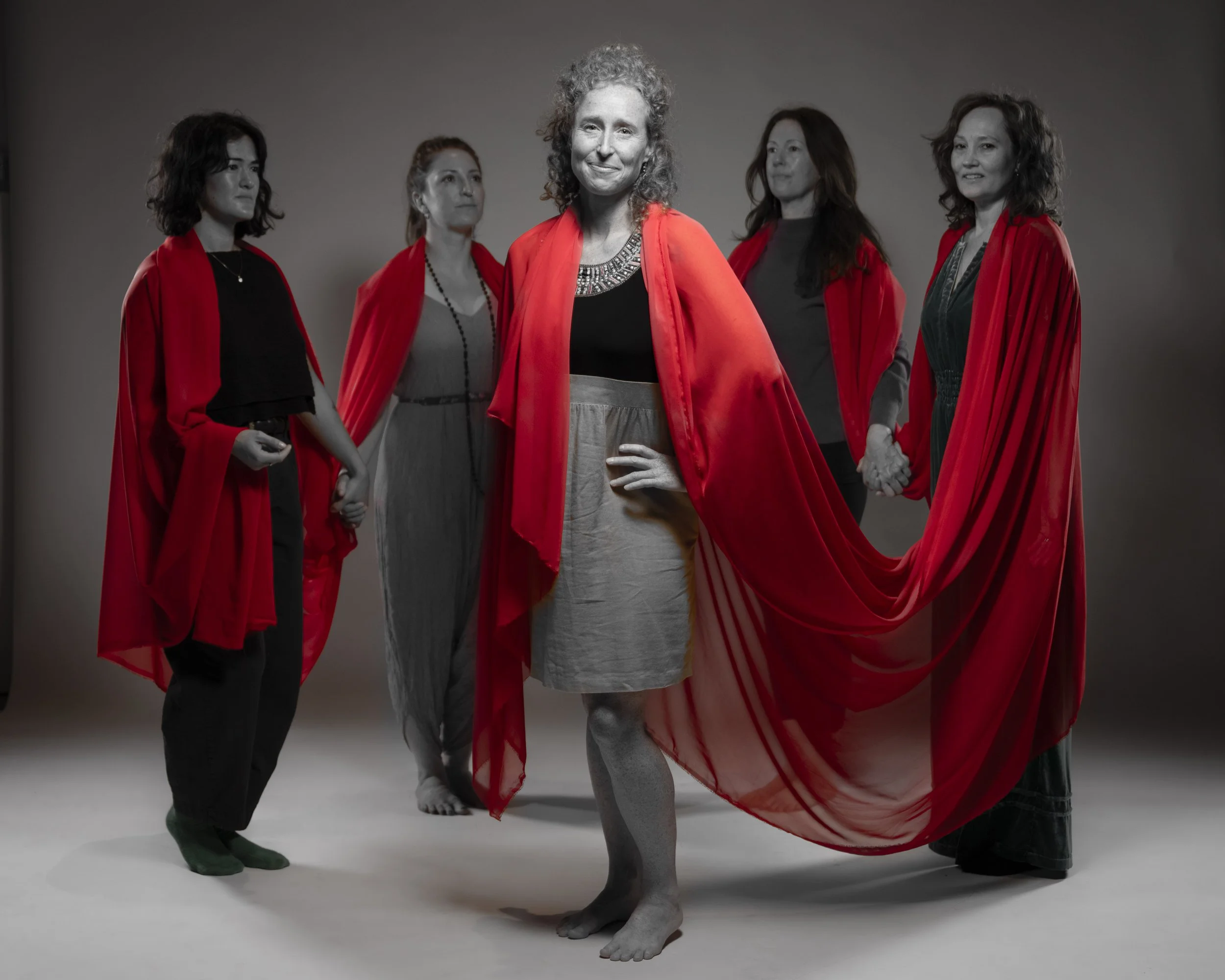
The red tent is a metaphorical place where women come together to create community. It is a container, a relationship. Something culture has forgotten; it is a circle, a spiral, an experience, and discussion. When women come together and hear each other's stories hold one another up in coherence and grace we create road maps to infinite ways of being, possibilities embodied in a life lived.
It is an art and community event in three parts:
Photography ritual experience (January & February)
Exhibit container at the Squamish Library (March 6-8th)
Circle Discussion Group during international Women’s day (March 6-8th)
This was a free community event.
Photo Exhibit & Circle Discussions; Speaker Line-up & Topics
Friday March 6th 2026
3-4 pm Circle Discussion with Erica Otto & Heather Hendrie
Opening conversation: the intention and purpose of the red tent.
4-5 pm Circle Discussion withSteph Nand & Heather Hendrie
Perspectives from a first-generation Canadian of colour. The importance of being social.
5-6 pm Exhibit open to public
6-7 pm Circle Discussion with Hannah & Heather Hendrie
Menstruation and the disabled experience.
Saturday March 7th 2026
11-1 am Exhibit open to public
1-2 pm Circle Discussion Kevani Macdonald & Heather Hendrie
Navigating being a woman, a mother, and a business leader and most importantly trying to create harmony between those identities.
2-3pm Exhibit open open to public
3-4 pm Circle Discussion Carolyn Green & Erica Otto
Perimenopause & spirituality.
4-5 pm Circle Discussion Dr Carmen Chornell & Erica Otto
Menopause & health and wellness.
Sunday March 8th 2026
12-1 pm Circle Discussion Erica Otto & Carolyn Green
Pregnancy, raising kids in the community, and making art.
1-2 pm Exhibit open to the public
2-3pm Circle Discussion Diana Lockett & Heather Hendrie
The post-menopausal experience.
3-4 pm Circle Discussion Erica Otto & Heather Hendrie
Exploring the impact of being in community this way. Ritual close of the project.
We’re honoured to invite women and those who identify as women of all ages to take part in Red Tent: Held in Community.
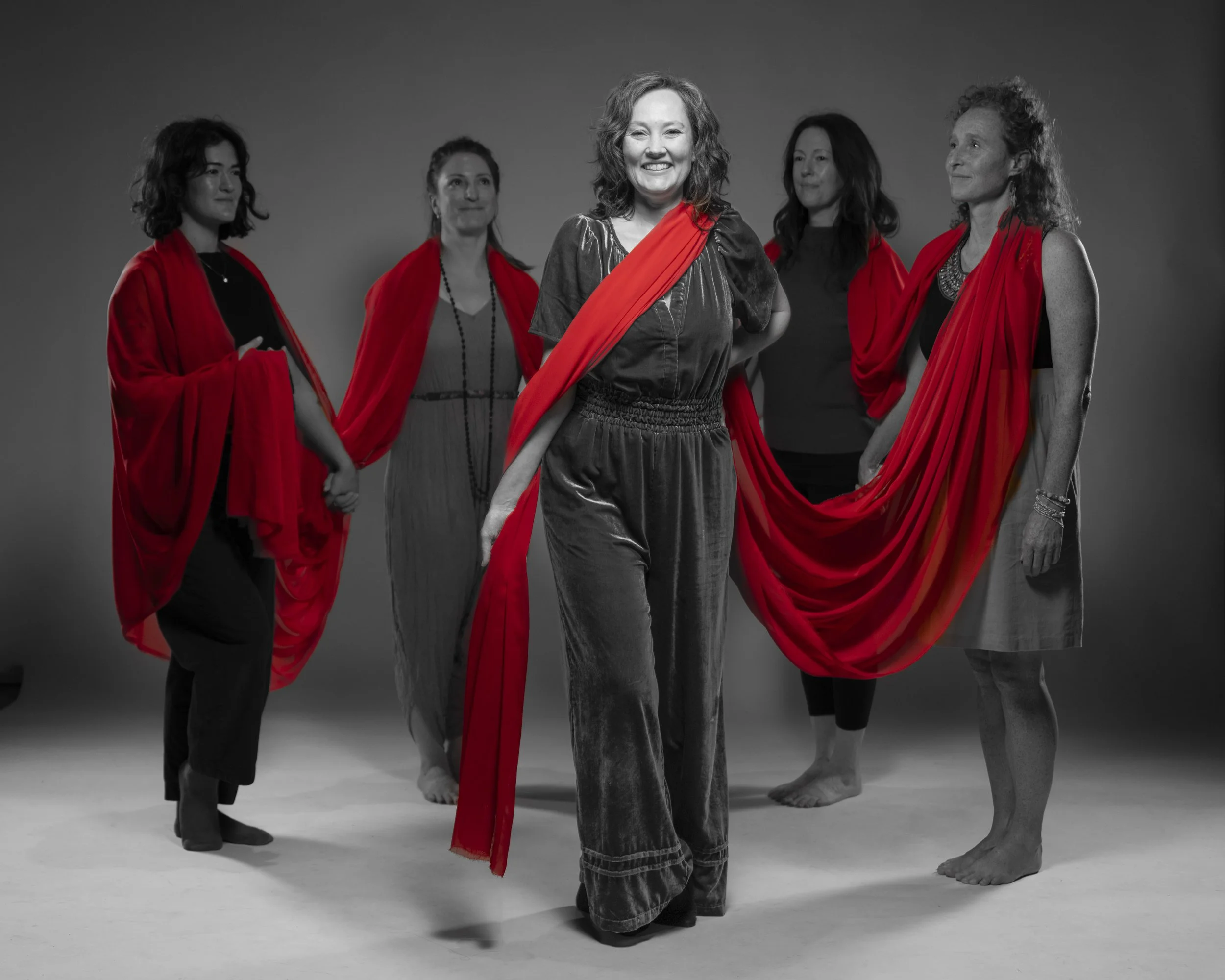
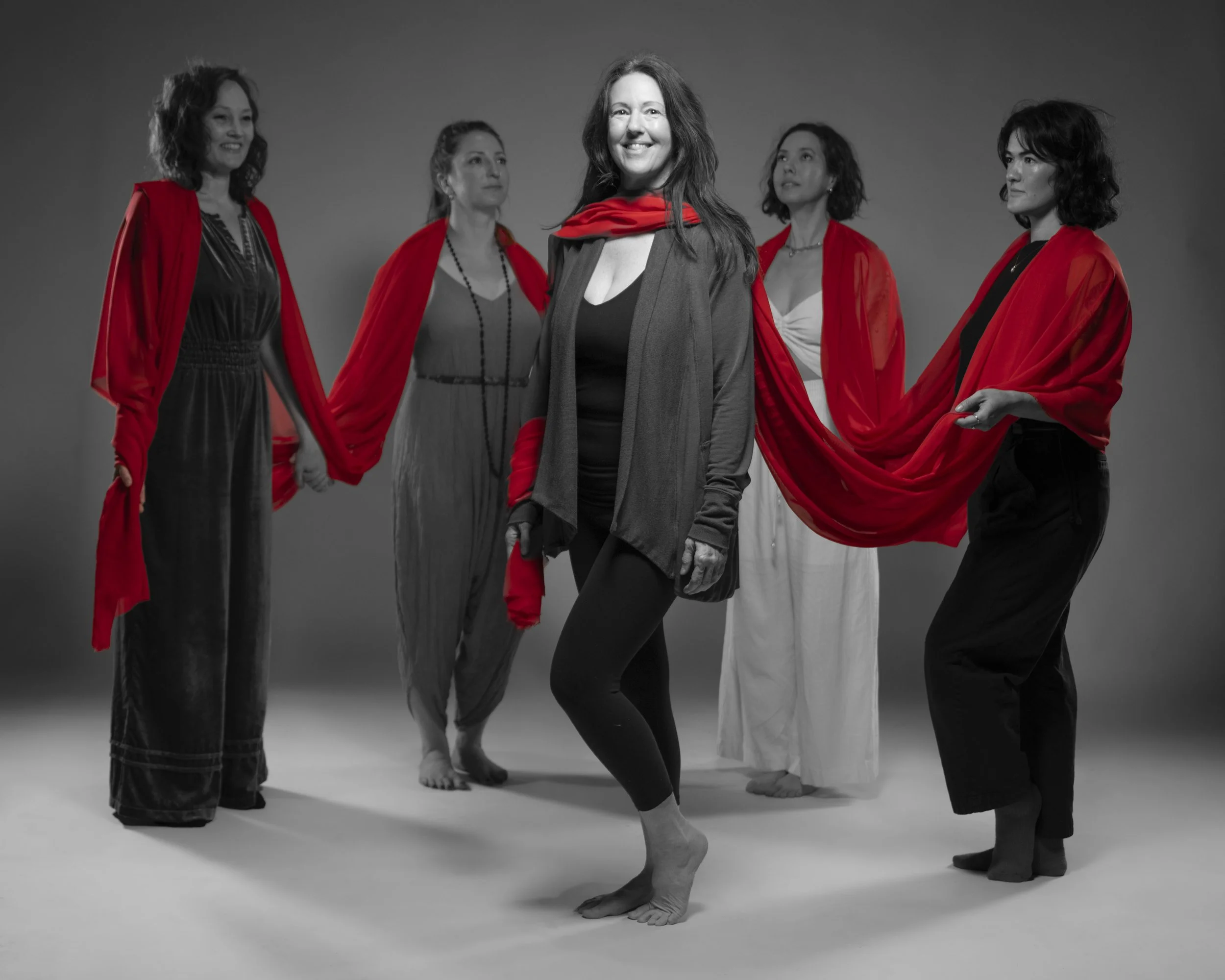
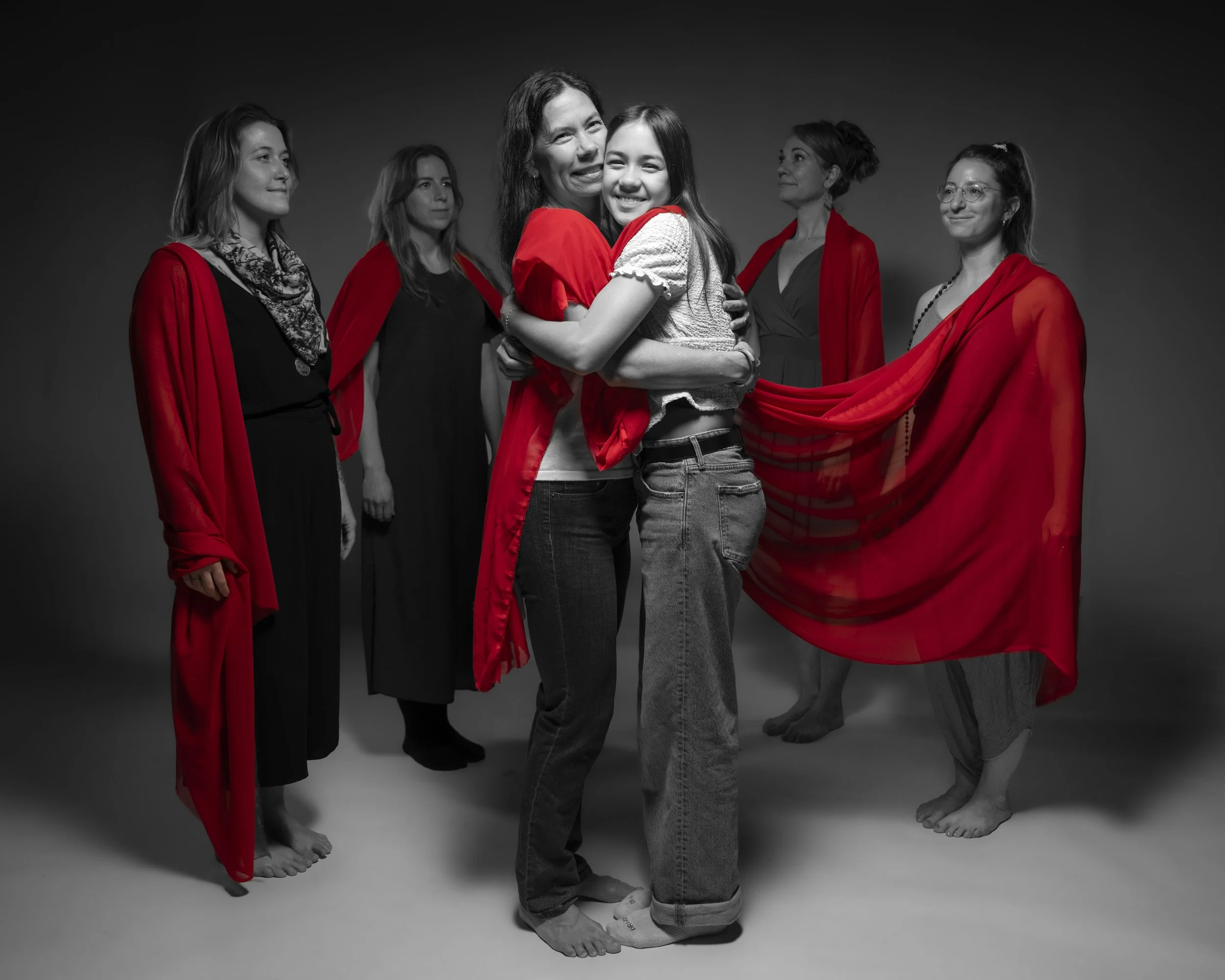
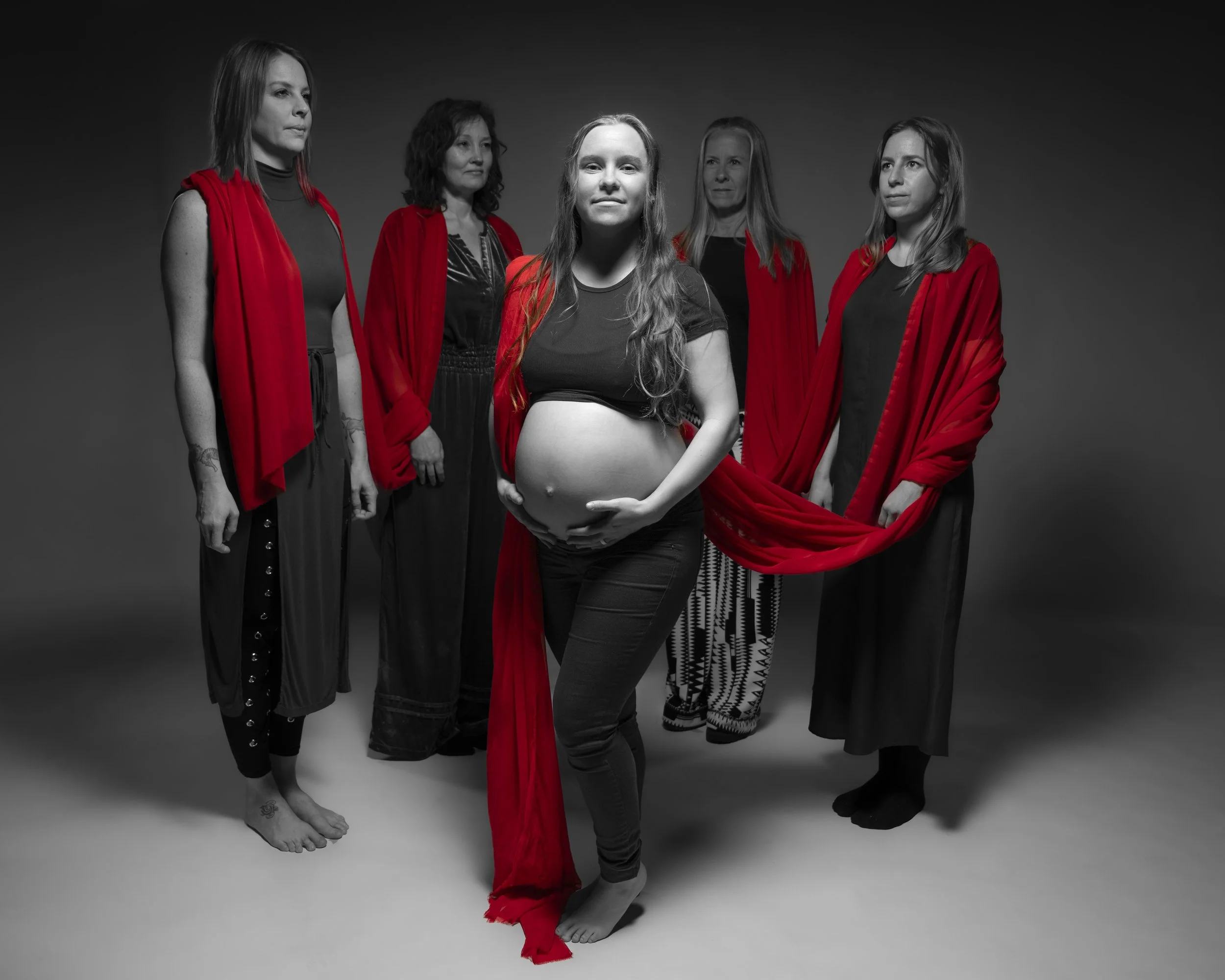
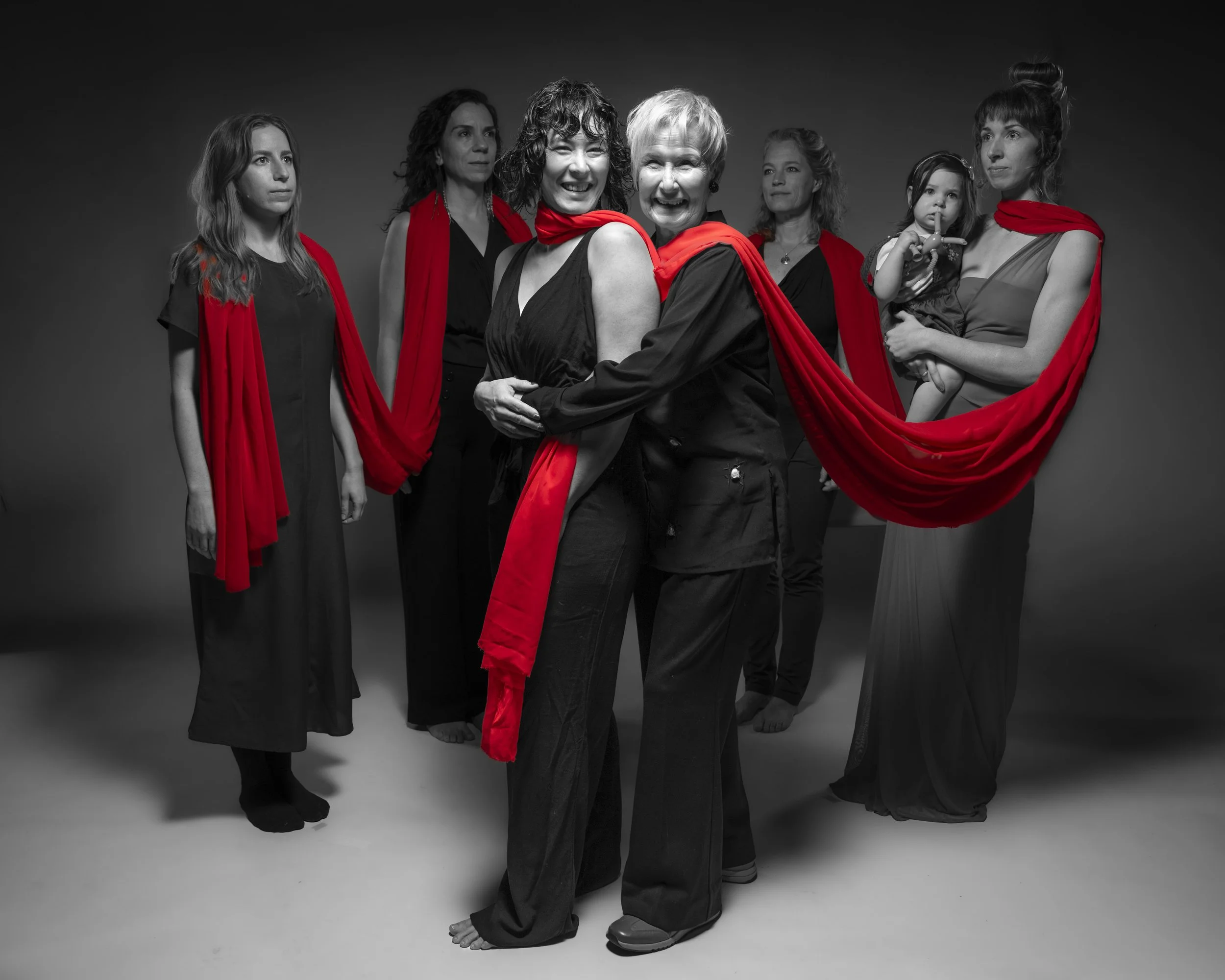
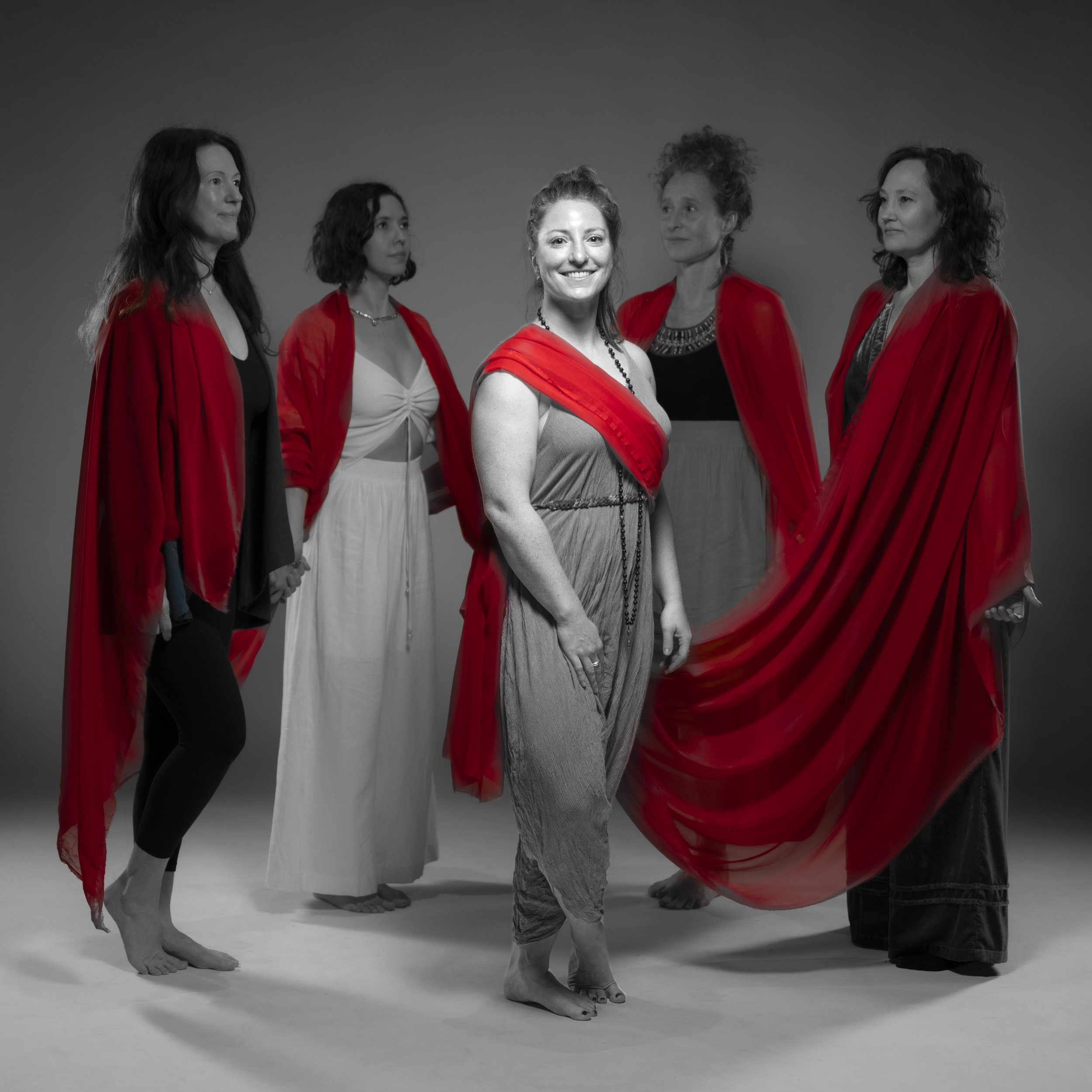
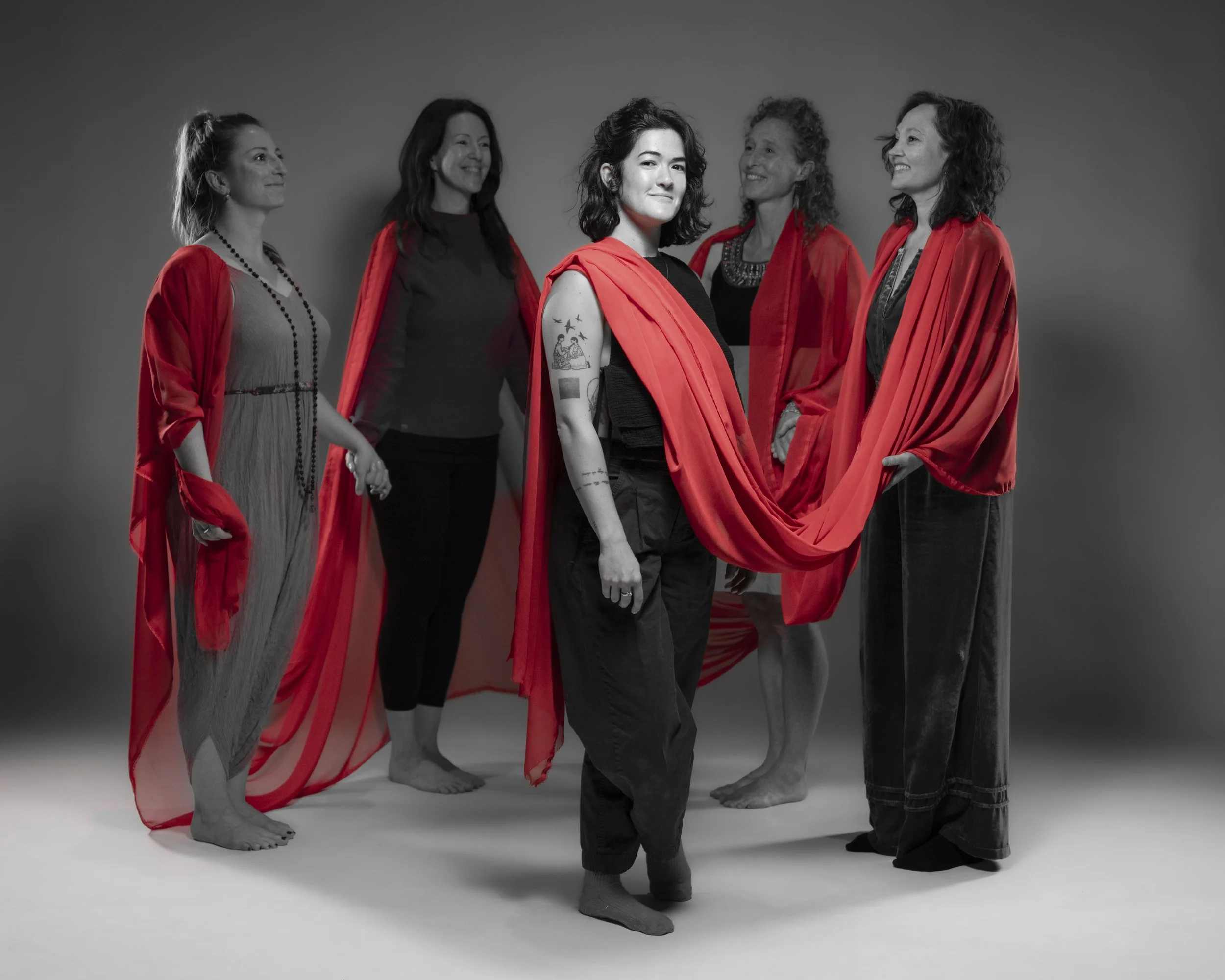
It is an opportunity to participate in a creative art experience, to support healing and community. The first part is a photography project celebrating identity, presence, and feminine embodiment. We will have hosted a ritual photo shoot with local photographer Brian Aikens in his Squamish studio, supported by local therapists and healers. Participants will be surrounded by flowing red fabric in a supportive setting designed to offer a joyful, embodied experience that honours your unique story and presence. Our invitation is to express yourself as you are for a portrait held within our metaphorical red tent.
The Circle discussion is an extension of the community circle where women are invited to witness conversations between women about topics relevant to womanhood. These will be followed by performance by local poets and musicians, with time to enjoy the photo exhibit and to foster connection and conversation.
This is a unique opportunity to partake and be held in a collaborative artistic process, connect with your community, and celebrate the experiences of those with uteruses in a professional gallery setting.
Press Releases
Red Tent Research
The modern Red Tent movement began with:
Anita Diamant’s novel The Red Tent (1997)
The book reimagined the biblical story of Dinah and described a women’s space — the “red tent” — where menstruation, childbirth, sexuality, grief, and pleasure were held in community rather than secrecy.
Important truth:
There is limited historical evidence that literal “red tents” existed universally across cultures.
What did exist across cultures:
Menstrual seclusion or rest spaces (sometimes nurturing, sometimes oppressive)
Blood taboos and blood reverence
Women gathering separately to share stories, food, and care
The modern movement is therefore mythic + cultural + political, not archaeological.
Core principles of the Red Tent movement
At its heart, Red Tent spaces are about:
1. Menstruation as meaningful, not shameful
Blood as a sign of life, creativity, cycles
Reclaiming menstruation from silence, disgust, and medical-only narratives
2. Cyclical wisdom
Honouring phases: bleed → rest → emerge → express
Resisting capitalist expectations of constant productivity
Allowing slowing, softness, and intuition
3. Story-sharing as medicine
Speaking truths that are usually hidden:
Period pain
Fertility struggles
Sexual pleasure and trauma
Motherhood ambivalence
Menopause
Being witnessed without fixing
4. Embodied belonging
Sitting on the floor
Eating together
Creating ritual
Being held by rhythm, not performance
Why the Red Tent movement matters now
The resurgence of Red Tents since the early 2000s is a response to:
Medical dismissal of menstrual suffering (hello PMDD)
Hyper-individualism (“do your healing alone”)
Productivity culture that ignores bodies
Gendered shame around blood, desire, and aging
Red Tents are countercultural by design.
They say:
You are not broken.
Your body is not wrong.
You do not need to be alone with this.
How Red Tents are practiced today
Modern Red Tents can look like:
Monthly gatherings aligned with the new moon
One-off community events
Retreat-based circles
Therapeutic or trauma-informed spaces (this is where you are especially well-positioned)
They may include:
Check-in circles
Tea + food
Journaling
Gentle movement
Silence
Laughter
Tears
Erotic aliveness (sometimes, but not always)
Where Red Tents often go wrong
Because this matters professionally and ethically, here are the common pitfalls:
1. Overclaiming ancient origins
Saying “this is how it’s always been” can erase real histories and cultures.
Better framing:
“Across many cultures, people have created spaces for rest, ritual, and storytelling around menstruation. We are drawing inspiration from that lineage.”
2. Gender essentialism
Framing Red Tents as “for women only” can exclude:
Trans and nonbinary menstruators
People who no longer menstruate but still live in cyclical bodies
Inclusive modern Red Tents often say:
“For people who bleed, have bled, or are in relationship with menstrual cycles.” Or anyone identifying as female, girl, women, and feminine.
3. Spiritual bypassing
Avoiding:
“Your pain is sacred, so you don’t need care”
Minimizing medical realities
Red Tents should coexist with therapy, medicine, and advocacy.
Moved by our project?
Consider donating to support us.
When you give, you invest in projects which build community through art and healing.